



A safe and enjoyable snow sports experience always starts with well-matched,high quality ski gear that adapts to harsh alpine environments. Ski goggles are essential protective gear for all snow sports. They shield your eyes from harmful UV rays, intense snow glare, cold wind, and flying debris. For most skiers and snowboarders, the biggest purchasing dilemma boils down to one question: should you go for classic traditional goggles or modern flip-up ski goggles?
Neither option is universally better. The two styles differ greatly in mechanical design, ventilation performance, usability, and scenario adaptability. This buying guide breaks down their core pros and cons to help you make a targeted choice based on your skiing habits and needs.
Core Structural Differences
Traditional Ski Goggles cover two mainstream forms: fully integrated fixed-lens structures and widely popular conventional magnetic interchangeable lens models. For fixed-lens versions, the lens, frame, and face foam are permanently fixed together with no movable lens parts. Conventional magnetic interchangeable lens goggles allow users to swap lenses for different light conditions, yet the lens cannot be lifted upward while wearing. This relatively simple build delivers solid stability and low mechanical failure risk. However, both types bring obvious drawbacks. To defog, check your phone, scan resort gates, or get a clear unfiltered view, you must fully remove the entire goggle or take off the magnetic lens. Frequent taking on and off scratches lenses and loosens the strap over time. These goggles only rely on fixed frame vents for passive airflow, resulting in limited and sluggish ventilation.
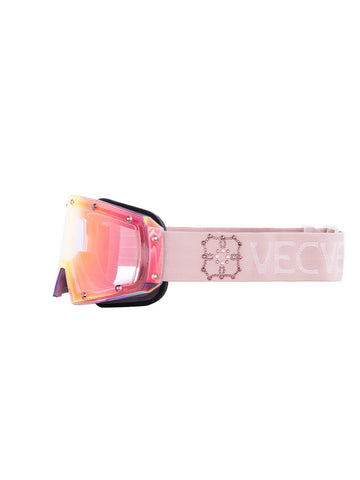
Flip-up Ski Goggles are an upgraded alternative built to fix traditional goggles’ pain points. They adopt an independent hinged and magnetic lens structure that flips upward separately, while the face-sealing foam stays snug against your face. Most models support dual-position adjustment: a half-flip for gentle continuous ventilation and a full flip for completely unobstructed vision. This on-demand active ventilation eliminates the need for constant goggle removal, greatly improving practicality on the mountain.
Performance Comparison & Buying Criteria
-
Ventilation & Anti-Fog Performance
Fogging is the most annoying and safety-compromising issue for skiers. Traditional fixed goggles struggle to release heat and moisture generated by heavy breathing and high-exertion runs. Fog quickly builds up on the lens during long chairlift rides, humid weather, or intensive skiing sessions. The only solution is to take off the goggles or detach the magnetic lens repeatedly, which interrupts your rhythm and exposes your eyes to cold wind.
Flip-up goggles deliver a decisive advantage here. You can instantly flip the lens open to release trapped moisture in seconds without removing the goggles. This real-time ventilation keeps the lens clear at all times, making them far more suitable for sweaty skiers, children, and high-intensity all-day riding.
-
Vision Quality & Eye Protection
In terms of core protection and optical clarity, high-quality traditional and flip-up goggles perform almost equally well. Both styles can be equipped with dual-layer lenses, UV400 full-spectrum protection, and mirrored coatings to block harsh snow reflection and prevent eye fatigue and snow blindness.
Visual sharpness, terrain contrast, and color accuracy depend on lens material and coating technology rather than frame structure. Both designs fully meet the vision demands of casual skiing and advanced all-mountain riding if fitted with premium lens configurations.
-
Fit & Daily Usability
Traditional goggles often suffer from poor internal airflow when worn over prescription glasses. The enclosed space traps heat, causing severe fogging for glasses wearers, even for conventional magnetic interchangeable lens variants. Many traditional models also use basic foam that causes facial pressure and discomfort after long-hour wear.
Flip-up goggles naturally solve this problem thanks to their active air circulation system. Most updated flip-up designs feature multi-layer high-density foam that fits diverse face shapes and provides a snug, pressure-free seal. They are widely compatible, ideal for prescription glasses wearers, adults, and kids.
-
Durability & Reliability
Traditional ski goggles achieve reliable overall durability. Fixed-lens versions have zero movable lens components, while conventional magnetic interchangeable lens styles only have simple lens detachment structures. Both require minimal maintenance and offer consistent long-term performance.
Flip-up goggles contain hinges and magnetic structures, so low-quality budget options may suffer from loose fitting or weak magnetism. Nevertheless, well-engineered premium flip-up goggles feature reinforced frames and stable flip systems, achieving durability comparable to traditional models.
Which Style should you choose?
-
Choose Traditional Ski Goggles If You:
1. Are a professional racer or minimalist skier who prioritizes ultra-light weight and maximum structural stability;
2. Ski occasionally with short session times and rarely encounter heavy fogging issues;
3. Prefer gear with zero movable parts and extremely low maintenance requirements.
-
Choose Flip-up Ski Goggles If You:
1. Ski frequently or spend all day on the slopes and struggle with persistent lens fogging;
2. Wear prescription glasses and need reliable over-the-glasses (OTG) compatible goggles;
3. Have kids who ski, as children sweat more and are more prone to foggy lenses;
4. Want convenient on-mountain usability for checking phones and scanning lift gates without removing goggles.
Premium Gear Reference: Anole Snow Goggles

For most recreational skiers and family riders, flip-up goggles offer better versatility and user experience. As a well-rounded high-performance option, the Anole Flip-up Ski Goggles series includes adult and kids versions with reliable upgraded features.
The adult Anole Ski Goggles adopt a stable magnetic dual-position flip system, paired with AuroraClear™ dual-layer HD lenses, REVO coating, and a complete triple anti-fog system. They deliver enhanced terrain contrast, 99%+ UV400 protection, and steady non-slip fitting, with full OTG compatibility and multiple stylish color options.
The Kids' Anole Ski Goggles inherit the same core performance with a lightweight kid-specific frame design. It effectively solves children’s common fogging and poor-fitting problems, offering safe, comfortable, and durable protection for young beginner skiers.
Conclusion
Traditional ski goggles excel at ultra-stable structure and zero-maintenance durability, perfect for professional racing and casual short-time skiing. Flip-up ski goggles stand out for adaptive ventilation, powerful anti-fog performance, and broad compatibility. For 90% of amateur skiers, glasses wearers, and family snow sports enthusiasts, flip-up goggles are the more practical, user-friendly, and cost-effective choice.
FAQ
Q: What is the biggest difference between flip-up and traditional ski goggles?
A: Traditional goggles have a fixed lens with only passive ventilation, while flip-up goggles support active instant ventilation via a magnetic flip structure to eliminate fog quickly.
Q: Are traditional ski goggles completely out of date?
A: No. They feature simpler structure, higher stability and lower maintenance, ideal for professional racers and casual short-time skiers.
Q: Which goggles suit people who wear prescription glasses?
A: Flip-up goggles with OTG compatibility are the best choice, thanks to their better internal airflow that reduces fogging.


